
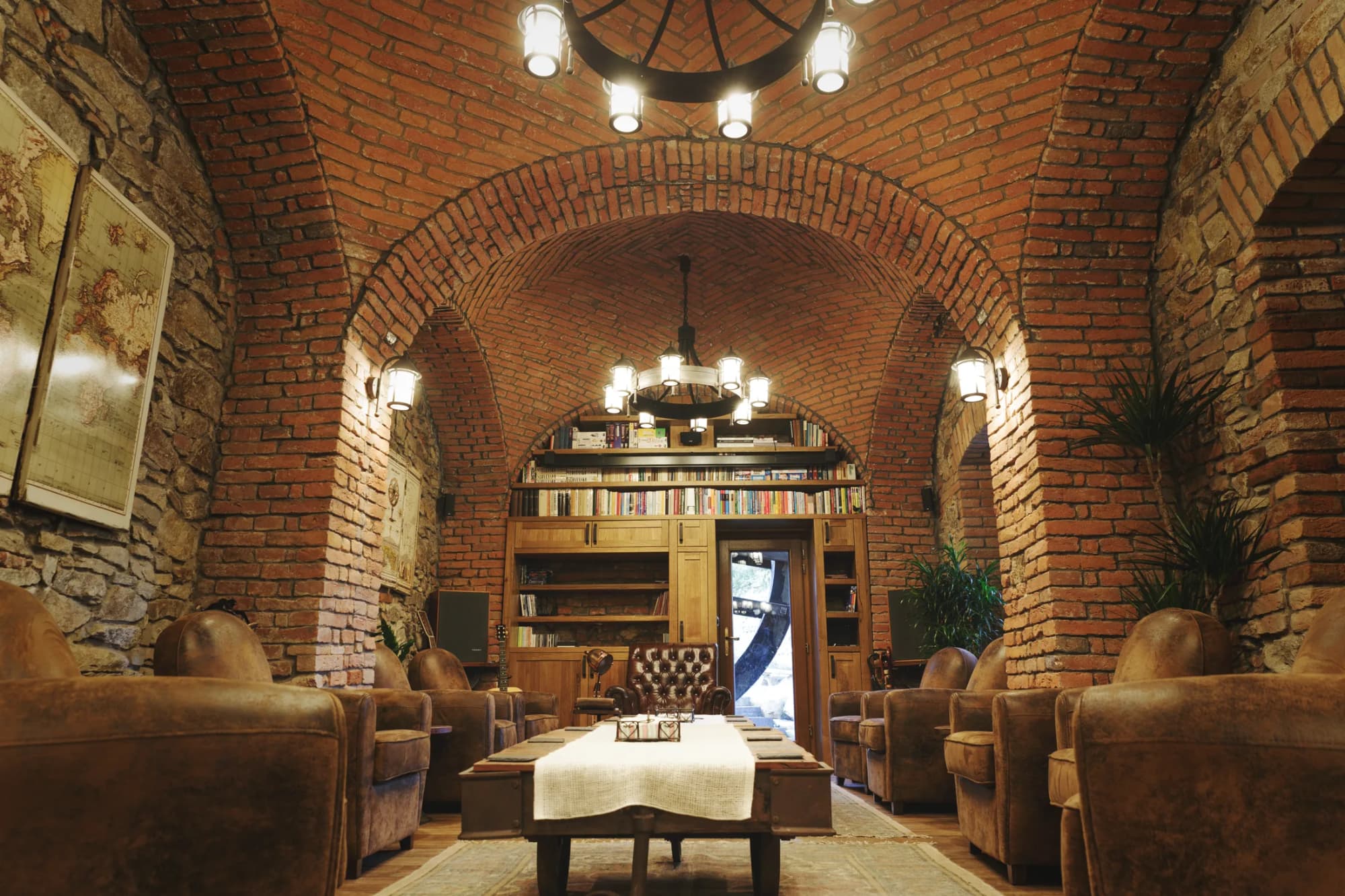
Full background of the program · personal archive
Good Relationships
in public and public administration and in politics
A detailed description of the vocational background and the methodology of the training.
Current overview of the program → · Formats and prices →
Who is the program for?
The training is suitable for participants of any age.
For team leaders, directors, project managers, HR and whole teams who want to improve the way they work together.
The program translates human-centred access into the working environment – into a consultation, an evaluation interview, a delegation into a situation where two people on the team have stopped understanding each other.
Ask about the programState and public administration
The variant for state and public administration transmits human-centred access to the environment of ministries, state authorities and public administrations (VÚC, cities and municipalities). It applies skills in staff communication, management processes and public contacts.
In the policy option, he works with the same skills in the internal and public dialogue: discussion with the opponent, negotiation, presentation to citizens and preservation of his own values in respect of others. Tell us in demand what context you are interested in.
Content and methodology of the training
Good political relations
New approaches to education in the area of relations between politicians PCM and its benefits. (policy-oriented management) Description and content of workshops PCM on new approaches to communication and management of political relations.
PCA skills
(Person Centered Approach)
PCA describes four relationship skills and PCM applies them in political, working and personal relationships.
Why go through this education?
- because the basis of all political work is human relations and mutual understanding
- because the quality of relations affects the political, working, social and personal interactions of each individual
- Because good relations with party colleagues, collaborators and opposition partners are essential to top politicians' personal satisfaction and quality work results
In education, learn about communication skills and people-to-people relationships and develop them and practice them in practical situations.
“Respect one another, live and work together despite our differences.” (Guy Laliberté)
What will PCM bring you?
- KNOWLEDGE of the four skills of PCA and their application in political communication and working relations.
- PROMOTION especially in relations with your party colleagues and opposition partners. You don't have to change them to understand them better. Thanks to your open approach, they will also understand you better. You can accept their right of opinion while correctly arguing and maintaining your own opinions and values.
- EFFICIENCY MANAGEMENT is reflected by the use of acquired PCA skills in all management processes, e.g. in the management of work consultations, in the correct delegation of tasks and in the use of positive forms of power.
You will learn the four skills of PCA and you will try to apply them in model interviews.
During the workshops, you will practice conducting interviews with party colleagues and opposition partners.
Training PCM is also appropriate if you want to develop communication and test the skills of PCA in political and working practice.
- Interpretation and training will give you space to test the skills of PCA in normal political situations.
- Each decision will be your own. Accepting a different or contradictory view while maintaining your own integrity and opinions will become a natural part of normal communication for you.
- You will also gain the confidence of others by being able to put yourself in their position without making it uncomfortable for them.
- You will learn that you do not need to counsel your workmates in indecisive situations, but you will be able to help them find the right decisions that they themselves will make and will gladly fulfill. In addition, you will discover ways to motivate them positively to higher performance.
What do you need to be aware of in political relations?
Policy action is carried out through relations with other persons.
Each politician needs good relations, especially with members of his political party, collaborators, as well as with citizens.
Why are there problems in political relations?
Every politician is a unique, sovereign being
- ... which we will not change unless it decides to change itself.
- ...which wants well, above all, for himself, his values and the goals of his political party.
- ...that can get rid of responsibility if we allow it.
What is a political relationship?
- It's a political decision to have a relationship with another politician.
- It is the responsibility of the policy that has made this decision for each of its relations.
- It is a political agreement on the rules of the relationship agreed and respected by both parties.
Communication skills also play a role in creating and maintaining good relations.
However, these abilities are gradually lost to culture and the social environment.
The definition of skills helps to understand their role in communication and how to develop them.
PCA describes four skills that the PCM methodology also applies in the field of political relations:
- Honesty, openness, authenticity, consensus
- Listening - empathetic, active, understanding
- Acceptance of a positive acceptance - conditional acceptance
- Empathy aid in personal growth
Good working relationships between politicians inside their political parties, as well as between policy-makers of different political groupings, are essential to achieving the desired objectives, thus making a significant contribution to good social outcomes.
The aim of education is to contribute to a new political culture on the Slovakia .
The best way to increase the efficiency of the work of politicians, and thus of the political party in which they operate, is to develop their ability to use the skills of PCA to achieve effective and effective relationships.
Training is scheduled for two stages:
1 . Use of PCA skills in all political performances (political meetings, shows, meetings with citizens...)
- How, in a clear and concise way, to formulate their views in speeches at political meetings and in public so as to preserve the integrity and values of the policy and the intentions of its political party, without prejudice to or humiliated by other politicians or citizens?
- How to understand the questions and opinions of other politicians, editors, debating citizens, as well as their opponents correctly?
- How can we consider and accept the views of our opponents while not weakening ourselves and remaining faithful to our own attitudes and opinions?
- How to prevent manipulation by other politicians, media editors or opponents in political relations?
- How to interpret and correct nonverbal communication?
- How to effectively engage in public and media dialogue?
2 . Use of PCA skills in management processes (governance management, delegation of tasks, evaluation interviews, etc.)
- How to choose suitable and responsible collaborators?
- How to manage and transfer responsibility effectively to your workmates?
- How to effectively delegate tasks? (The correct content of the task, how to verify its understanding, etc.)
- How to manage meetings effectively? (Preparation and structure of discussed materials, guidance of speakers, management of discussion and brainstorming, conclusions and minutes.)
- How to improve relationships by reviewing them and conducting evaluation interviews?
Methodology and sequence of skills acquisition PCA
Training in real working and political situations provides room for learning skills and testing them in daily communication.
Methodological training procedures:
- Acquiring Conscious Imcompetence
- familiarity with the skills of PCA and their description
- Watching and recognising skills in politicians' performances at meetings and in the media through video recordings
- Acquiring Conscious Competence
- conscious testing of the use of skills in model interviews
- use of skills in modelled parliamentary debates and their recording and subsequent evaluation
- Acquiring unknowing competence
- frequent conscious use of skills leads to their natural adoption in communication
Training takes the form of workshops. Conscious use of skills is acquired by participants in dealing with specific work and relationship situations, which also concern their political life and work.
Training is carried out by the Slovak lecturer
Dr. Peter ŠVEC , PhD., who has been trained by Ernesto Meadows (CAMELOT , La Jolla , California)
Ernest Meadows was a colleague and follower of Carl Rogers , who described the individual skills of PCA.
Meadows discovered that PCA releases energy, and modified PCA for the field of work in state institutions and companies.
The skills he teaches are successfully used in state institutions of different types and sizes in North American and European countries. The Slovak lecturer applied the relevant education to the conditions of European culture and the work of politicians.
The time and length of the training are adapted to the requirements of individual participants. Education takes place in small groups.
The place of learning will be chosen by each group according to their needs and opportunities.
The programme is an educational workshop. It does not replace psychotherapy, diagnostics, or health care.
Full description of the program · Word → (Slovak original) · Full description of the programme · PDF → (Slovak original)