Sincerity
Openness, authenticity, kongruencia. Say what you really think, no attack and no retreat.

English translation prepared with machine translation. The Slovak version is the original. Documents, recordings and text in images retain their original language.
Professional backgrounds
Humanist psychology and a human-centred approach form the basis of personal and work relations learning.
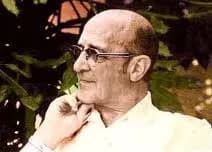
American psychologist, one of the founders of humanist psychology, developed a human-centred approach, Person Centered Approach (PCA). Born in Oak Park, Illinois, he died in San Diego, California.
His work places emphasis on authenticity, unconditional positive acceptance and empathic understanding. From the therapeutic environment, PCA principles have been extended to education, group work and human relations.
Life and work approximates the biography of Howard Kirschenbaum: Carl Rogers . Life and work..
Rogers’s colleague applied PCA to management, leadership and conflict resolution. In La Jolla, California, he worked with the Center for Studies of the Person (CSP) and the CAMELOT educational institution.
The original three of Rogers' skills have been expanded by a fourth-- empathic listening. He stressed personal integrity, decision making and responsibility for working relations. International programmes have also created space for Slovak participants including Eva Sollárová and Peter Švec.
In years 2002–2003 led workshops at Slovakia in Malé Vozokany , Smolenice and Nitra.

CAMELOT was an educational and consulting institution in La Jolla, California, founded by Ernest Meadows. It followed the work of Carl Rogers and transferred human-centred access to companies, management and management of people.
Multiday trainings developed personal integrity, empathic listening and responsibility in working relationships. Both the manager and the employee in the use of these skills are based on their own authenticity and are responsible for their decisions and cooperation with others.
Openness, authenticity, kongruencia. Say what you really think, no attack and no retreat.
Listen to what the other person says and check that you understand it correctly.
Consider a person’s views as they are, even when you disagree, while remaining true to your own values, opinions and integrity.
Understand what others want to achieve and help them discover for themselves how to achieve it.
Full practical PCA · PDF guide (Slovak original)
From the Peter Švec learning methodology for daily work and personal interviews. The relationship is based on the decision to be in it, the responsibility for its own actions and the rules that both parties adopt and comply with.
Name what you are experiencing, what you think and what you stand for.
Check the meaning of the report before you respond to it.
Appreciate the right of one's own opinion and, at the same time, express your attitude clearly.
Support the other in finding its own solutions and developing its capabilities.
Memories of coworkers at Ernie · Slovak version, PDF (Slovak original)
Memories published by Center for Studies of the Person bring the teacher closer through the people who learned, worked and talked with him.
The teaching of Ernie meant taking responsibility for his own decisions: first, choosing who he wanted to learn from, then choosing who he wanted to be. As a permanent reference, he sees experience learning and action in harmony with himself.
In cooperation with the teacher, mentor, and friend, she appreciated his integrity and the ability to question established concepts of relationships, power, and leadership. Even difficult conversations brought her growth; despite differences, she perceived cooperation as worthwhile.
He put Ernie among the most important people of his life. By observing his behavior and listening, he learned to be more himself, to appreciate the experience of others, and to make real contact in personal and professional life.
He describes personal responsibility as a fundamental change in his life. Empathic listening, conspiracy, empathy and unconditional positive acceptance is also used outside work. It reminds Ernie of Ernie's vision of more humane businesses and the international community of the Pajaro Group, which continues to do so.
He recalls a unique, generous and firmly convinced teacher with whom he worked in the 1980 ' s. Their views sometimes differed, but Ernie's time, attention, and willingness to examine remained an important experience for him.
I was looking for a way to be a better boss, husband, father, friend...
Thank you. Eve Sollar's For getting to know you and the opportunity for me to be your student.
Ernie, you'll remember up there how long it took me to believe that there are skills that use all my relationships can improve.
I believe, I believe, I live with them, I share them with others and I develop them, thanks to you.
I often remember our meetings also at Slovakia . I'm glad I helped you to teach and live in castles in Smolenice, Malé Vozokany and U Count in Nitra. I know how you liked these objects, because you named your educational institution CAMELOT and you were one of the knights of King Arthur's round table for me.
I've learned, thanks to you, Ernie, to choose in my life persons who have the same values and relationship skills as I prefer. You have taught me to respect people around me who are different from me, to develop and to cooperate with them. I appreciate the time I spend with them and the way I experience it.
I believe if I come up there to see you, we'll be on the same floor...
Showing 4 of 4 photos.
Short demonstrations from period records approximate the way Ernest Meadows works .
Historical overview of PCM · period document, PDF (Slovak original)
Dr. Peter ŠVEC , PhD. completed a multi-annual education of CAMELOT under the guidance of Ernest Meadows completed by practical examinations. Since the year 2003 realizes workshops at Slovakia .
Three certificates of CAMELOT Peter Švec →
Person Centered Management (PCM ) applies PCA in working processes: in consulting, delegation of tasks, selection and evaluation of staff or trade negotiations. Peter Švec also transferred this access to the WeM management information system, which develops and implements SWECK.
PPP – Preventive practical psychology is a new approach and methodology for the development and training of skills PCA , which Peter Švec develops in its programmes. The intention is to test their conscious application in everyday life.
PCA provides a relationship basis for activities based on humanist psychology in the work of clinical psychologists, mentors and coaches. The Virginia Satir growth model is a stand-alone approach to which it builds in its work PhDr. Lenka ŠVECOVÁ.
Ernest Meadows acts as a machiner and Peter Švec as a director of the company. The motion for a conversation is the letter of the engineer. Four parts approximate the call for a model interview, an evaluation of the previous situation, the model interview itself and its final evaluation.
Download the input of the director's hand machine (DOC) (Slovak original)
(original universal sheet for roleplay for directors)
You will receive this letter and your mission will be to call me to your office.
The training room will be the office.
I am the engineer (teacher) the author of this letter and you are the director.
All I'm asking you to do is start a conversation with me.
What kind of goal you set for our meeting, and what result you will want to achieve, is yours.
However, it is important to use all the elements of acceptance in the interview to deal with the issue successfully.
This is a letter that is very close to the real letter received by the general manager of a large furniture company that produces furniture for churches.
Mr. Director.
I just got back from a national annual meeting. I was upset about what was happening there. I saw people drinking, dancing, and flirting. I saw people who weren't married getting into hotel rooms together. The meeting did not start with a Christian prayer. There were no inspiring Christian speakers, although there was a Jewish speaker.
During the last four years since you were the director, our company has deviated from its Christian heritage and identity. As I thought about these things, I've come to the conclusion that I have a problem with how you run our company. I concluded that you were either unable or unwilling to lead our society in a way that would preserve our Christian heritage and identity. I have information that our current clientele is already falling from the Christian background.
Although I know that attending the annual meeting is mandatory for the invited, as things are the way they are, I will not be attending the next meeting.
Yours sincerely
Ernie Meadows
mechanical engineering
Jere Moorman · Slovak version of the poem from the memories of CSP on Ernie Meadows.